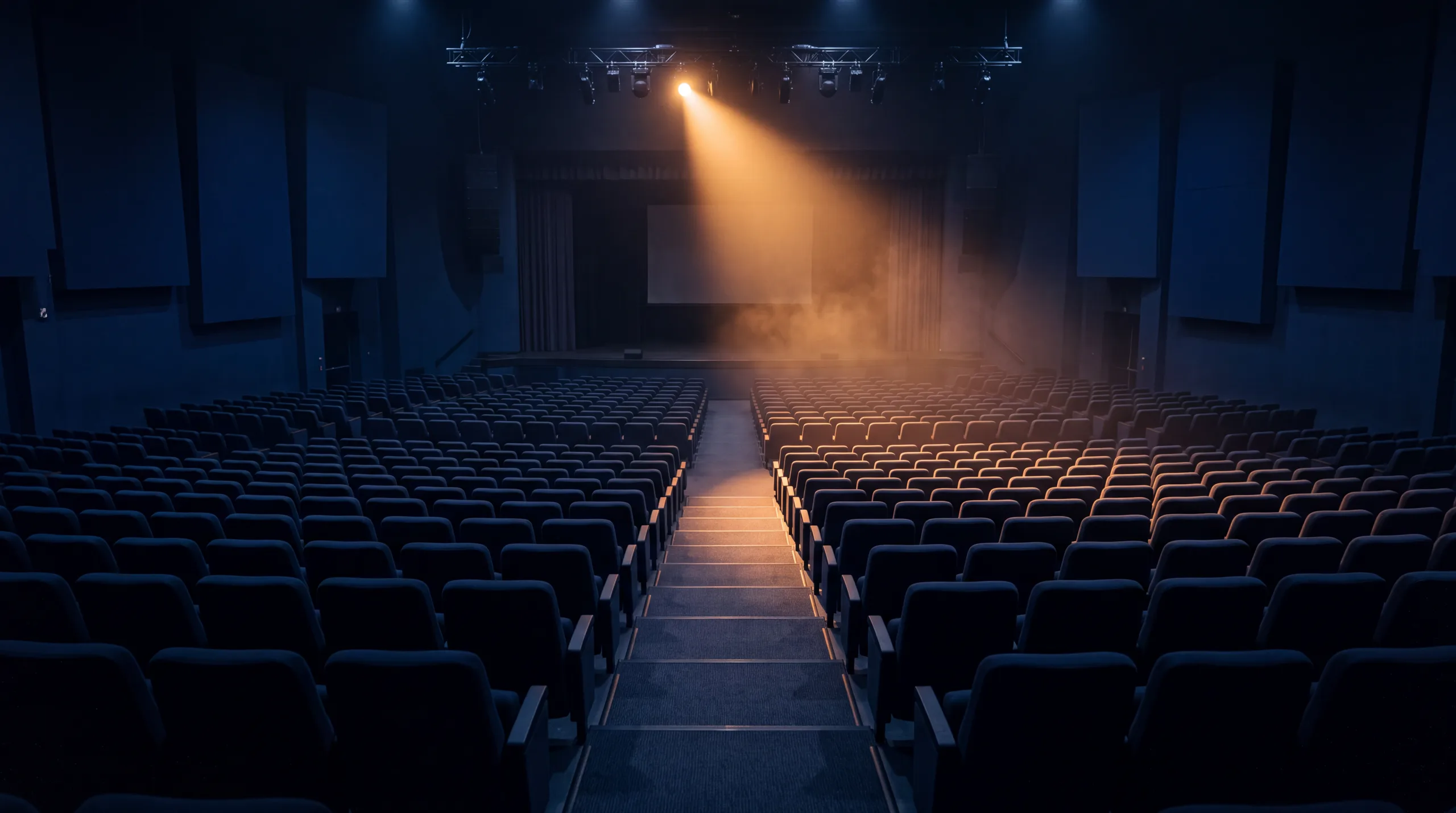
Live audience platform
One screen, one code, up to 5,000 people in the room.
BamzIQ runs the moment a room is all looking the same way: a keynote, a webinar, an all-hands, a lecture. Put the screen on the projector, put the code on the badge, and everybody in front of it has a say.
- 5,000 in one room
- 17 question types
- Moderated Q&A, ungated
- The room survives a crash
Same engine, three rooms
It is one product, and it is not one vocabulary.
A conference organiser, a head of internal communications and a lecturer want the same machinery and describe it in three different languages. Pick the door that sounds like your room.
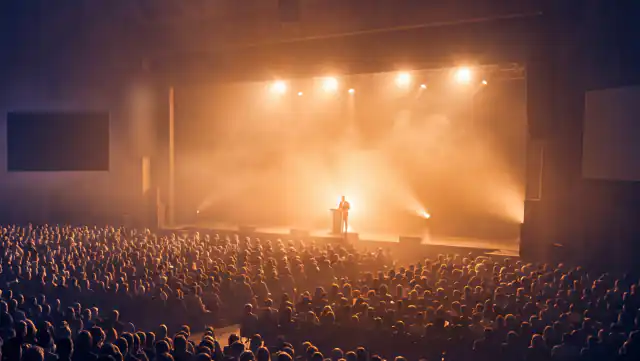


5,000in one room
Measured on one node against the real server over real sockets: 5,000 of 5,000 players joined with zero failures, every one received the question inside a 34ms window, and every answer was counted with the exact expected split. The same room was killed outright with a SIGKILL and came back with all 5,000 players in under two seconds.
What happens in the room
The parts that only matter when it goes wrong.
Nobody chooses a tool for its failure behaviour, and everybody remembers it. These are the four things this engine was built around, each with the measurement that holds it up.

Bad wifi does not cost marks
Your score comes from how long you thought, measured on your own device and clamped by the connection’s server-measured round trip. Honest latency is forgiven; fabricated speed is floored.

Drop out mid-question and it still counts
A phone that loses the venue’s wifi halfway through a question comes back, submits, and is credited for the time it was offline rather than penalised for it.

The room comes back
Kill the server in the middle of a session and the room reforms: the PIN resolves, the tokens still work, and answers given before the crash still score.
The answer key never reaches a phone
The key travels on a control channel that players are not on. A pending audience question is held the same way, so nothing reaches the projector before a moderator has seen it.
What you can run
More than a quiz, and it always was.
7 of the 17 question types score nothing at all. A webinar that never asks a right-answer question is fully expressible today.
Instruments, not just questions
- Poll
- Word cloud
- Open response
- Brainstorm
- Scale
- Net promoter score
- Drop pin
- Content slide
Plus 9 scored types, from multiple choice to ordering, matching, numeric and tap-the-image. Every one of them works live on a PIN, self-paced inside a window, or as a session inside an event.
Events, above the game
An event is a named container with a date range, an ordered run of show, and one standing that runs across every session in it. One code on the lanyard resolves to whichever session is live.
Around it: a presenter remote with the answer key, a co-host desk for the operator at the back, a chrome-free cast screen for a second projector, a green room for the pre-flight check, and a transparent overlay URL for a broadcast compositor.
What it costs
Priced per event, not per presenter.
Capacity is bought as a one-time pass with a participant ceiling and a 30-day window. Twelve occasional facilitators cost nothing extra, because what is priced is the room rather than the people at the front of it.
Commercial use is permitted on every plan.
Conferences, webinars, product launches, recruitment events, client work: allowed on the free plan and on every pass, with no cap on how long a session runs. The market leader forbids exactly those uses below its upper tier, as a licence rather than a feature.
No payment is taken yet. A purchase is recorded and the pass is issued; settlement happens by invoice, outside BamzIQ. No payment provider is connected.
No account needed to play
Put a code on the screen.
Joining needs a PIN and nothing else: no sign-up, no app, no email. Hosting needs an account, and the free plan runs a real room of 50 with commercial use permitted and no session time limit.